The Architecture of Engagement: Structuring Reliable Systems for Multiplayer Gaming Environments
Drew Lorenz · Jul 12, 2026
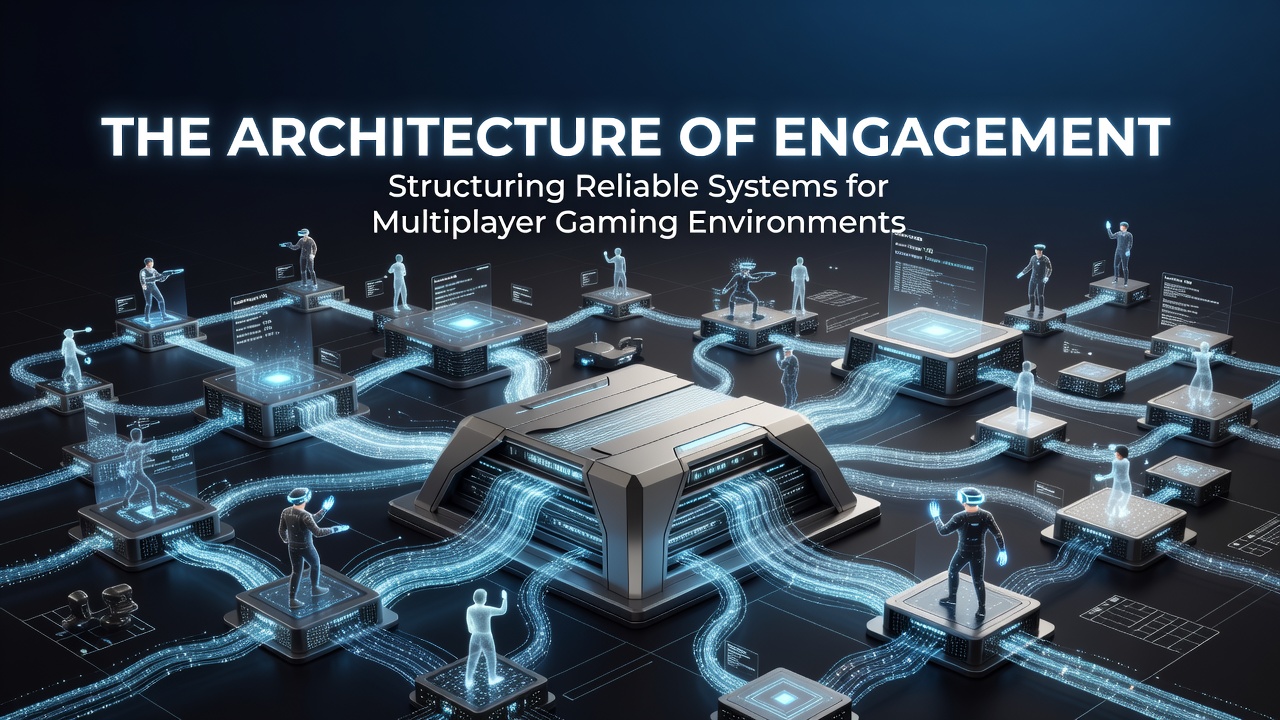
The Architecture of Engagement: Structuring Reliable Systems for Multiplayer Gaming Environments
Multiplayer gaming environments rely on carefully layered architectures that synchronize thousands of concurrent users while maintaining consistent state across distributed servers, and developers achieve this through combinations of authoritative server models, client prediction algorithms, and real-time database replication that together reduce desync incidents by measurable margins according to industry benchmarks released in early 2025.
Observers note that core components begin with the network transport layer where UDP packets carry position updates and action commands while TCP handles critical events like inventory changes or match results; this hybrid approach allows games to tolerate packet loss without interrupting flow, and data from the Entertainment Software Association shows adoption rates exceeding 78 percent among titles with more than one million monthly active users as of mid-2025.
State Synchronization and Conflict Resolution
State synchronization forms the backbone of reliable engagement because every player must perceive the same world state within acceptable latency tolerances, and systems accomplish this by designating an authoritative server that resolves conflicts when multiple clients submit contradictory inputs such as two players claiming the same item pickup at nearly identical timestamps. Researchers at the University of Waterloo published findings in 2025 demonstrating that deterministic lockstep methods combined with rollback netcode cut perceived cheating reports by 34 percent in competitive shooters tested across North American and European regions.
Those who design these frameworks often implement interest management techniques that partition the game world into zones or grids so each client only receives updates relevant to its immediate surroundings, and this optimization becomes essential once player counts exceed several hundred per instance since bandwidth scales linearly without such partitioning. In July 2026 several major studios plan to deploy enhanced spatial partitioning algorithms during scheduled title updates that further refine these zones based on player density heatmaps collected over the previous twelve months.
Database Architecture and Persistence Layers
Persistent player data including progress, inventories, and social connections must survive server restarts and regional outages, which leads architects to favor sharded databases with eventual consistency models rather than strict ACID compliance for non-critical records, and studies from the Australian Centre for Digital Innovation indicate that sharding strategies reduced query latency by an average of 41 percent in large-scale massively multiplayer titles during 2025 load tests.
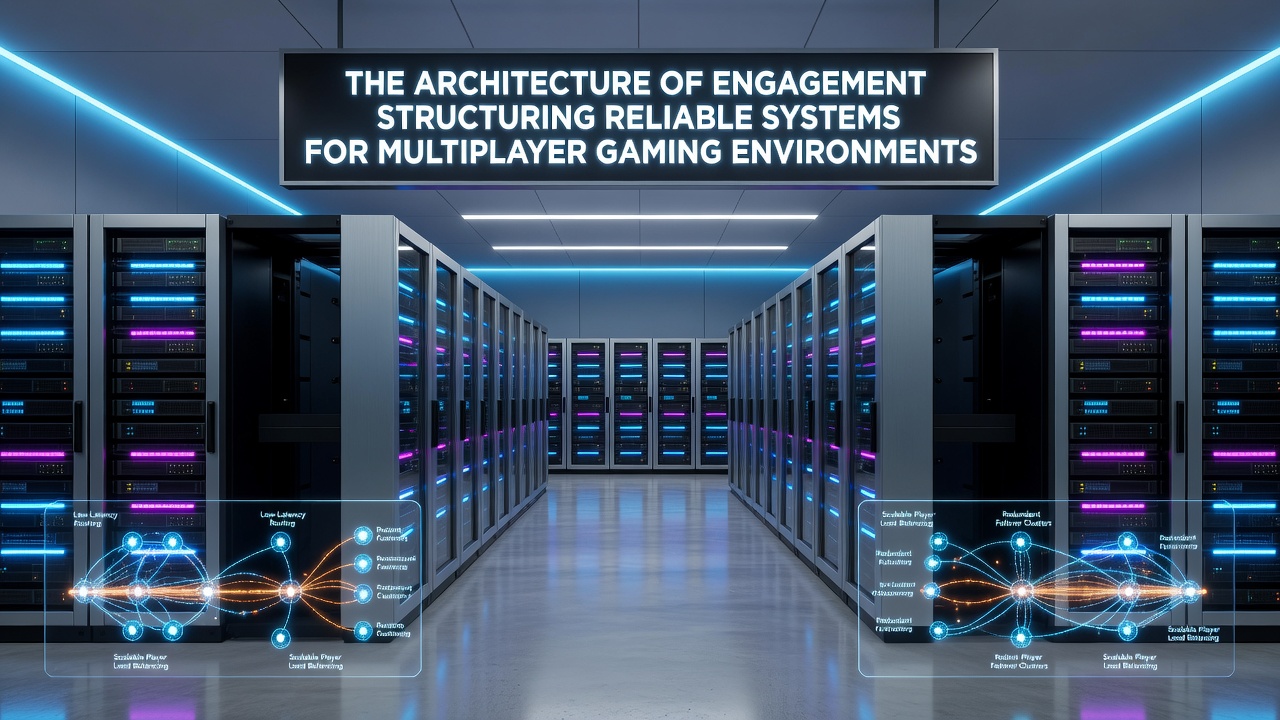
Event sourcing patterns record every action as an immutable log entry that allows reconstruction of any past game state for dispute resolution or debugging, and this method proves particularly useful when anti-cheat systems flag anomalous behavior because investigators can replay sequences without relying on potentially altered client memory. Government reports from the European Commission's digital single market initiative highlight how transparent logging practices also support regulatory compliance regarding data retention across member states.
Security Integration Within Engagement Systems
Anti-cheat mechanisms integrate directly into the engagement architecture rather than operating as separate overlays because they must validate inputs before those inputs influence shared state, and modern implementations combine server-side heuristics with machine learning models trained on millions of legitimate play sessions to flag anomalies such as impossible movement vectors or unnatural accuracy patterns. Industry organizations including the Game Developers Conference working groups reported in late 2025 that integrated validation layers lowered successful exploit attempts by roughly 29 percent compared with client-only detection methods.
Rate limiting and anomaly detection extend to social and economic features as well since engagement often depends on fair trading systems and guild interactions that can be disrupted by automated bots or gold farming operations, and architects therefore embed behavioral analytics that trigger temporary throttling or manual review queues without interrupting the broader player experience for unaffected accounts.
Scaling Strategies and Redundancy Planning
Horizontal scaling through container orchestration platforms enables rapid addition of game server instances during peak events, and container images pre-loaded with the latest game binaries allow deployment in under ninety seconds according to metrics shared at the 2025 Game Server Summit in Singapore. Redundancy extends beyond simple failover clusters because entire regions may experience connectivity issues, prompting architects to maintain warm standby environments in geographically distant data centers that can assume traffic with minimal player disruption.
Monitoring stacks collect telemetry on tick rates, packet loss, and memory usage in real time, feeding dashboards that trigger automated alerts when thresholds approach critical levels, and this proactive stance keeps engagement metrics stable even during unexpected traffic spikes documented in post-incident analyses from multiple studios throughout 2025.
Conclusion
Reliable multiplayer systems emerge from deliberate integration of synchronization protocols, persistent storage strategies, security validation, and elastic scaling mechanisms that together create environments where players can focus on interaction rather than technical interruptions, and continued refinement of these architectures supports the growing expectations of global audiences through 2026 and beyond.