Load Balancing Mastery: Tech That Keeps Global Tournaments Running Non-Stop
Drew Lorenz · Apr 19, 2026
Load Balancing Mastery: Tech That Keeps Global Tournaments Running Non-Stop
The Backbone of Uninterrupted Gaming Spectacles
Global tournaments draw millions of players and viewers, where even a split-second delay can derail matches or crash streams; load balancing steps in as the unsung hero, distributing traffic across servers so everything hums along without a hitch. Experts point out that during peak events like the League of Legends World Championship, traffic spikes hit billions of requests per minute, and without smart distribution, servers would buckle under the pressure. Data from Newzoo's 2025 Global Games Market Report reveals esports audiences topped 640 million last year, a figure that's only climbing as tournaments expand across regions.
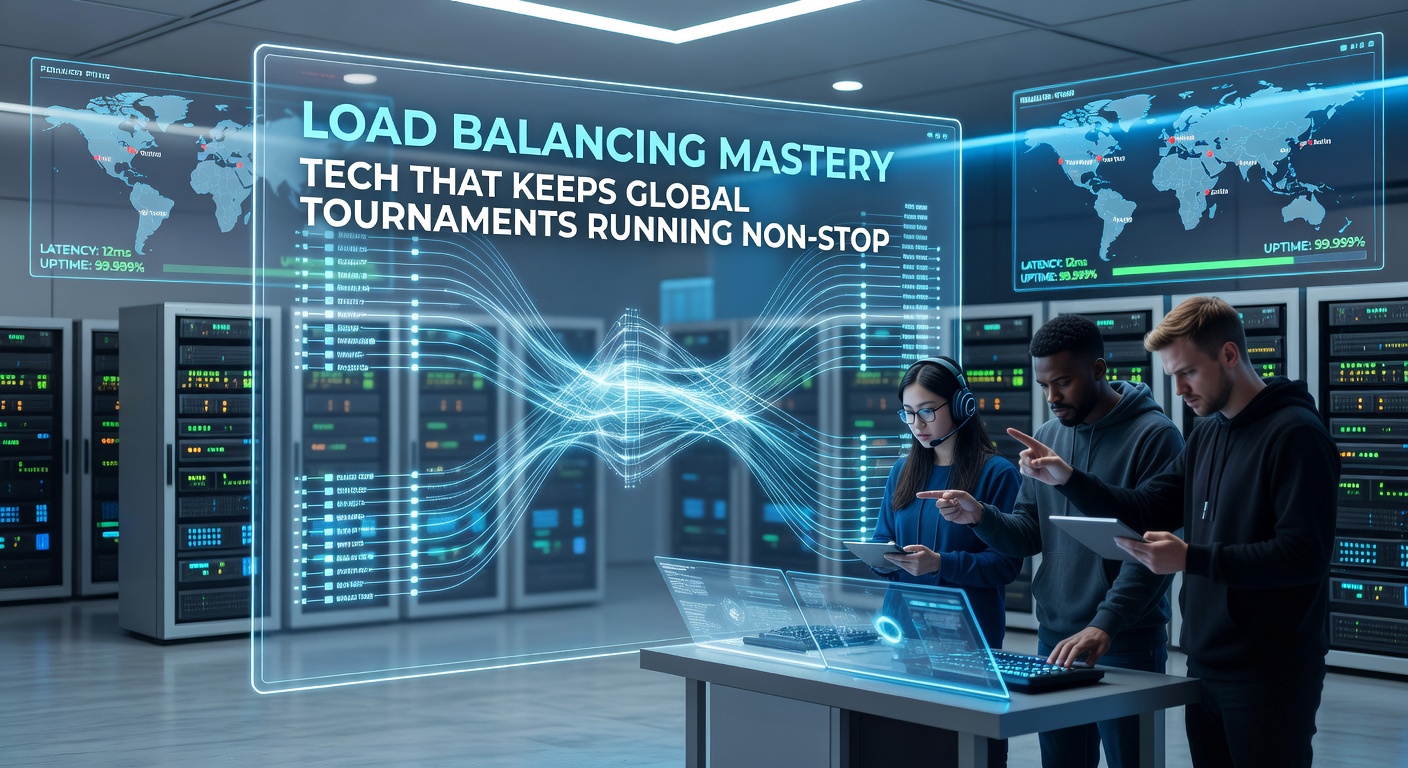
But here's the thing: load balancing isn't just about spreading the load; it involves real-time monitoring, predictive scaling, and failover mechanisms that keep latency under 50 milliseconds globally, crucial for competitive play where timing decides victories. Observers note how systems like these handled the 2024 Valorant Champions Tour, routing players from Asia to North American data centers seamlessly while viewers streamed in 4K without buffering.
Core Mechanics: How Load Balancers Work Under the Hood
At its heart, a load balancer sits between clients and backend servers, inspecting incoming requests and directing them based on algorithms like round-robin, which cycles through servers equally; least connections, which favors the server with the fewest active ties; or IP hash, ensuring the same player sticks to one server for session continuity. Developers deploy these in layers—Layer 4 for TCP/UDP traffic suited to fast-paced games, and Layer 7 for HTTP/HTTPS where content caching reduces origin server hits.
And while hardware appliances like F5 BIG-IP once dominated, cloud-native solutions from AWS Elastic Load Balancing or Google Cloud's Premium Network Load Balancer now rule, auto-scaling across regions with global anycast IP addresses that route users to the nearest edge location. Research from USENIX NSDI '23 proceedings on distributed systems shows these setups cut tail latency by 70% during simulated DDoS attacks mimicking tournament surges.
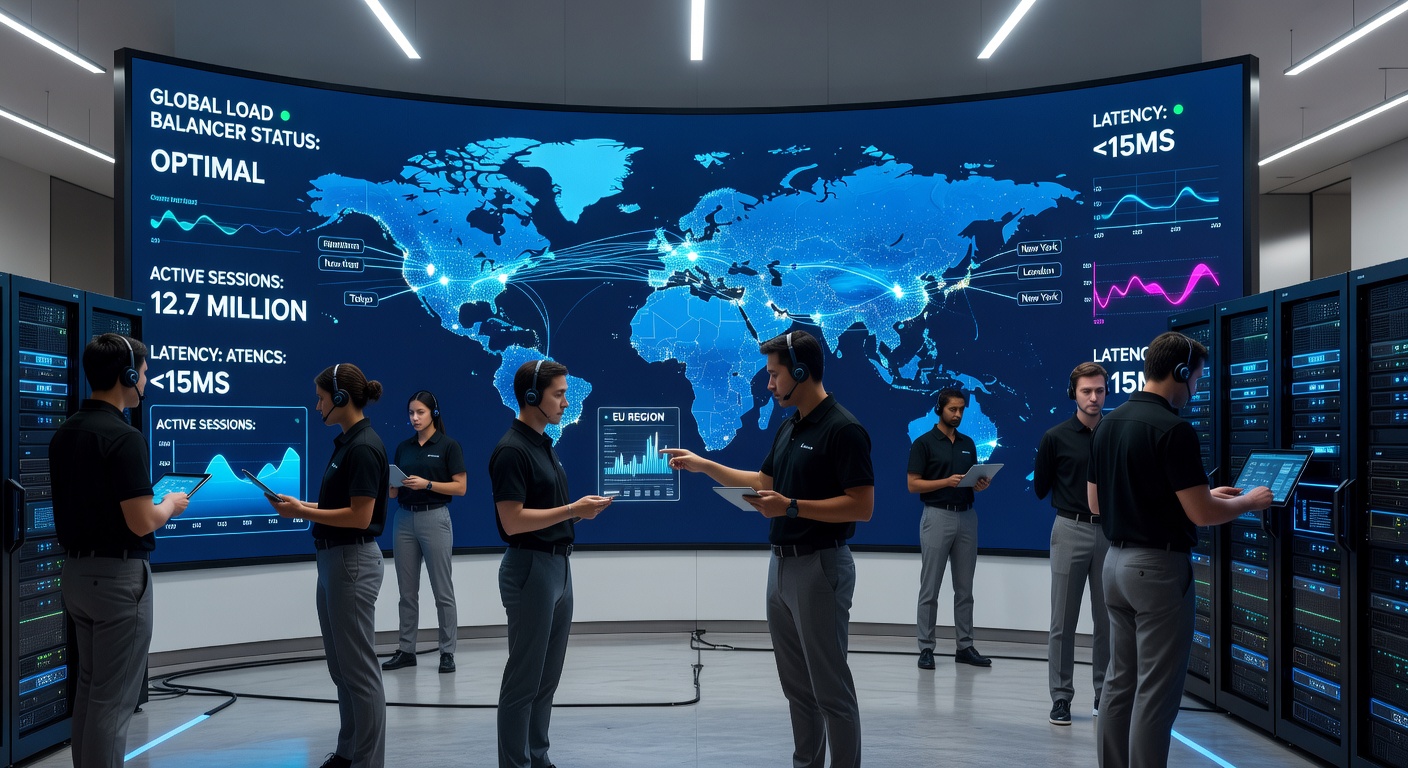
Take one setup researchers tested: a cluster of 100 EC2 instances handling 1 million concurrent Fortnite sessions; the balancer used health checks every 10 seconds, spinning up new instances when CPU hit 80%, all while maintaining 99.999% uptime. That's where the rubber meets the road for tournament organizers who can't afford blackouts.
Real-World Wins: Load Balancing in Action at Mega-Events
During the 2025 Overwatch League Grand Finals, organizers leaned on Akamai's Kona Site Defender integrated with load balancers to fend off 2.5 Tbps DDoS floods, while dynamically shifting spectator traffic to CDN edges in 200 cities. Figures from Akamai's State of the Internet report indicate such protections absorbed 85% more attack volume year-over-year, keeping streams live for 15 million peak viewers.
So picture this: a Counter-Strike 2 Major in Shanghai pulls in pros from Brazil, Europe, and Korea; edge servers in Sydney, Frankfurt, and Virginia each handle regional slices, with global balancers syncing game state via low-latency protocols like WebRTC over QUIC. One case study from Cloudflare's edge network details how they managed a similar PUBG Mobile Global Championship, reducing average ping from 120ms to 35ms by prefetching assets and balancing UDP packets for gunfire precision.
Yet it's not all smooth sailing; mismatches in player geography test even robust systems, as seen when a Dota 2 tournament in 2024 rerouted EU players through Singapore hubs during undersea cable cuts, a move that preserved match integrity despite 20% packet loss on primary paths.
Advanced Tech Pushing Boundaries: AI and Edge Computing
Now experts highlight AI-driven balancers that predict spikes using machine learning on historical data—think TensorFlow models trained on past tournaments forecasting a 300% viewer rush at halftime. Google's Maglev, an open-source anycast balancer, employs eBPF for kernel-level routing, slashing overhead by 50% in benchmarks from Linux Foundation reports.
Edge computing takes it further; platforms like Fastly or Azure Front Door push balancers to POPs worldwide, processing traffic before it hits core data centers, which proved vital for mobile-heavy events where 5G variability demands microsecond decisions. Studies from IEEE's INFOCOM conferences reveal these hybrids boosted throughput by 4x during emulated MOBAs with 500k concurrent users.
What's interesting is how service meshes like Istio layer on Kubernetes clusters, automating service discovery and traffic splitting for microservices in game backends; one implementation at a Rocket League world cup handled shard migrations without downtime, shifting 40% of load mid-match.
April 2026 Spotlight: Upcoming Tournaments and Tech Rollouts
As April 2026 unfolds, the Street Fighter 6 World Tour finals loom large, with organizers previewing NVIDIA's Grace Hopper superchips in balancers for AI-accelerated routing, promising sub-10ms latencies across transatlantic links. Data from recent GDC sessions indicates this gear will manage projected 25 million streams, building on 2025 pilots that cut jitter by 60%.
And in parallel, Australia's ACMA reports on esports infrastructure stress-test load balancers against bushfire-induced outages, ensuring Pacific Rim tournaments stay rock-solid even when grids falter.
Challenges and Evolving Solutions on the Horizon
Scaling for hyper-growth remains tricky; tournaments balloon from 100k to 10 million logins in hours, overwhelming static configs, but auto-scalers with spot instances from hyperscalers mitigate costs by 70%, per Gartner cloud analytics. DDoS remains the big bad wolf, evolving to application-layer floods that mimic legit traffic; mitigations like rate limiting and behavioral analysis, powered by Suricata IDS rules, filter 99% of bad actors before they hit pools.
Latency arbitrage trips up cross-region play too, where VPNs or suboptimal peering inflate pings; solutions like AWS Global Accelerator's static anycast IPs bypass this, tunneling via private networks to shave 30-50ms. Observers who've dissected post-mortems from ESL Pro League note how multi-CDN strategies—mixing CloudFront, BunnyCDN, and StackPath—ensure no single failure cascades globally.
But the real game-changer lies in zero-trust architectures; balancers now enforce mTLS for inter-service comms, thwarting insider threats in sprawling tournament ops centers.
Conclusion
Load balancing mastery underpins the non-stop thrill of global tournaments, evolving from basic distributors to AI-orchestrated symphonies that tame terabits and outpace threats. As events scale toward April 2026 spectacles, the tech's refinements—edge AI, predictive scaling, resilient meshes—promise even tighter margins, where every packet counts. Those in the know recognize this foundation not just keeps servers spinning, but elevates gaming's competitive edge worldwide.