Echo Chambers of Engagement: Tracing Query Patterns to Refine Gaming Platform Structures
Drew Lorenz · Jul 26, 2026
Echo Chambers of Engagement: Tracing Query Patterns to Refine Gaming Platform Structures
Query patterns in gaming platforms reveal how repeated user searches, support requests, and in-game interactions form closed loops that shape content delivery and community dynamics, and researchers tracking these flows have documented their influence on everything from matchmaking queues to recommendation engines. Data collected across multiple platforms shows that players often cycle through similar phrases when seeking matches, updates, or troubleshooting help, which in turn feeds algorithms designed to surface familiar content and reduce friction. Observers note that this cycle strengthens certain engagement pathways while narrowing exposure to alternative play styles or communities.
Mapping Query Trails Across Platforms
Platform operators log millions of daily queries ranging from simple match requests to complex searches for specific mods or event schedules, and these records create detailed maps of player intent that developers use to adjust backend structures. Studies conducted by academic teams at institutions in Canada and Australia demonstrate that clusters of identical or near-identical queries tend to concentrate around peak hours, leading engineers to prioritize localized server responses and tailored suggestion lists. Those who've analyzed the datasets point out that patterns emerging in July 2026 highlighted a sharp rise in queries related to cross-platform progression systems, prompting several major services to recalibrate their data pipelines accordingly.
Support ticket archives further illustrate the phenomenon, because repeated questions about latency, account linking, and reward distribution often mirror the same terminology players type into search bars. Analysts at European research centers have examined these overlaps and found that platforms responding quickly with pre-built answer modules see measurable drops in follow-up queries, which then alters the overall engagement graph. The process continues as updated response systems generate new data points that refine the next round of structural changes.
How Echo Chambers Form in Engagement Data
Echo chambers develop when query-driven recommendations reinforce the same content pathways, and evidence from large-scale telemetry indicates this occurs most visibly in competitive and social features. Players searching repeatedly for ranked matches within narrow skill brackets receive increasingly precise suggestions that keep them inside those brackets, while broader exploratory queries receive less algorithmic emphasis. Figures released by industry monitoring groups reveal that users exposed to these tightened loops show higher short-term retention yet reduced discovery of new game modes over multi-month periods.
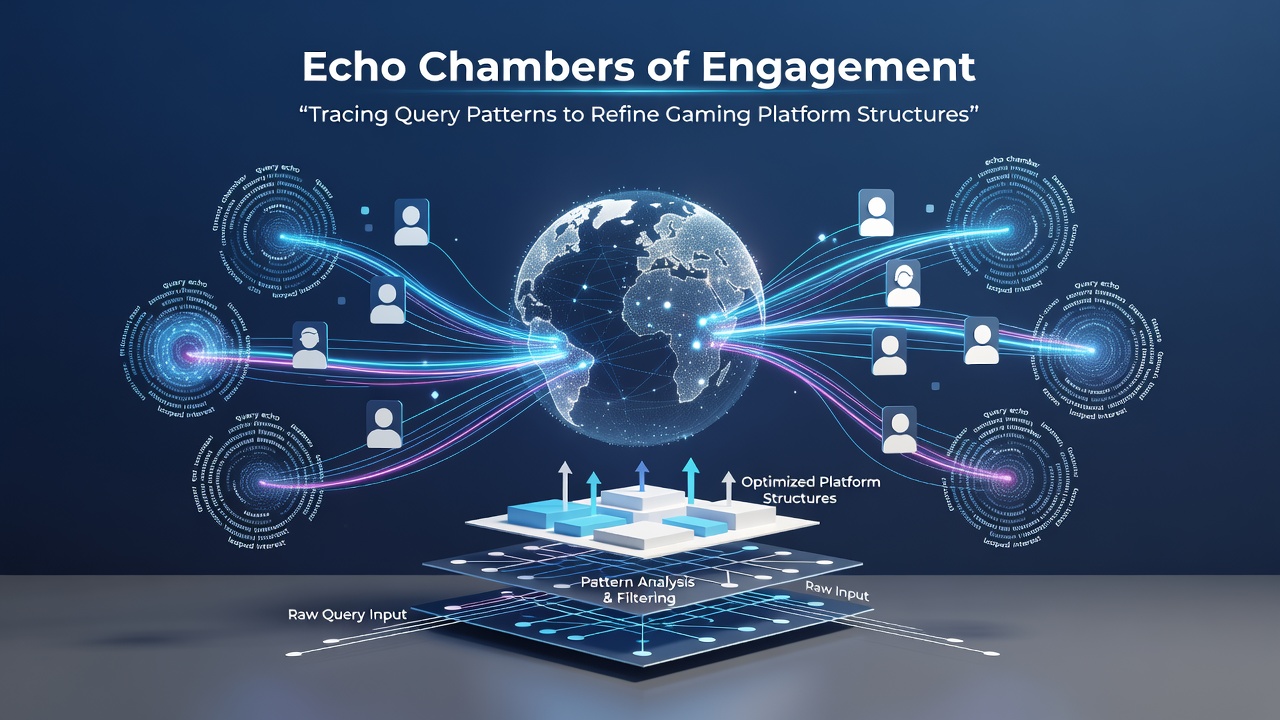
Platform architects respond by introducing controlled query diversification tools that surface adjacent options without disrupting established flows, and case examples from services operating in Asia-Pacific regions show modest success in expanding player horizons. Data indicates these interventions work best when paired with transparent explanations of why alternative suggestions appear, because users who understand the logic behind recommendations tend to engage with them more readily. Regulatory bodies such as the Australian eSafety Commissioner have reviewed similar mechanisms and noted their potential to balance engagement metrics with broader user experience goals.
Refining Platform Structures Through Pattern Analysis
Developers apply pattern recognition techniques to query logs in order to redesign navigation menus, notification schedules, and content hierarchies, and the adjustments often produce measurable shifts in session length and return rates. Research published by university consortia in the United Kingdom and Singapore describes how platforms that segment queries by time of day and device type achieve more accurate load predictions, which then informs decisions about regional server distribution. The same studies highlight instances where query volume spikes around seasonal events led to temporary structural expansions that later became permanent features after sustained analysis.
Those monitoring these refinements observe that changes rarely happen in isolation, since one adjustment to matchmaking logic can influence support query volume and search behavior downstream. Teams therefore maintain iterative review cycles that compare pre- and post-update datasets, allowing them to trace whether intended improvements actually materialize. Reports from North American trade associations confirm that platforms adopting this continuous tracing approach report steadier performance across global player bases during high-traffic windows.
Future Directions in Query-Informed Design
Emerging techniques combine natural language processing with behavioral telemetry to anticipate query clusters before they fully form, and early deployments in 2026 suggest platforms can preemptively adjust structures to maintain variety within engagement loops. Government agencies tracking digital services in the European Union have begun examining how such predictive systems intersect with data protection requirements, while academic groups continue to publish comparative analyses across different platform scales. The ongoing work demonstrates that query pattern tracing serves as both a diagnostic and a design tool for maintaining functional gaming ecosystems.
Conclusion
Tracing query patterns provides gaming platforms with concrete signals for refining structures that support player engagement, and the resulting adjustments affect everything from recommendation accuracy to community diversity. Continued examination of these flows, supported by data from multiple regions and research bodies, supplies the factual basis for ongoing platform evolution without relying on unverified assumptions.