Data-Driven Hooks: GamingTechPro's Analytics That Boost Player Stickiness
Felix Fischer · Apr 16, 2026
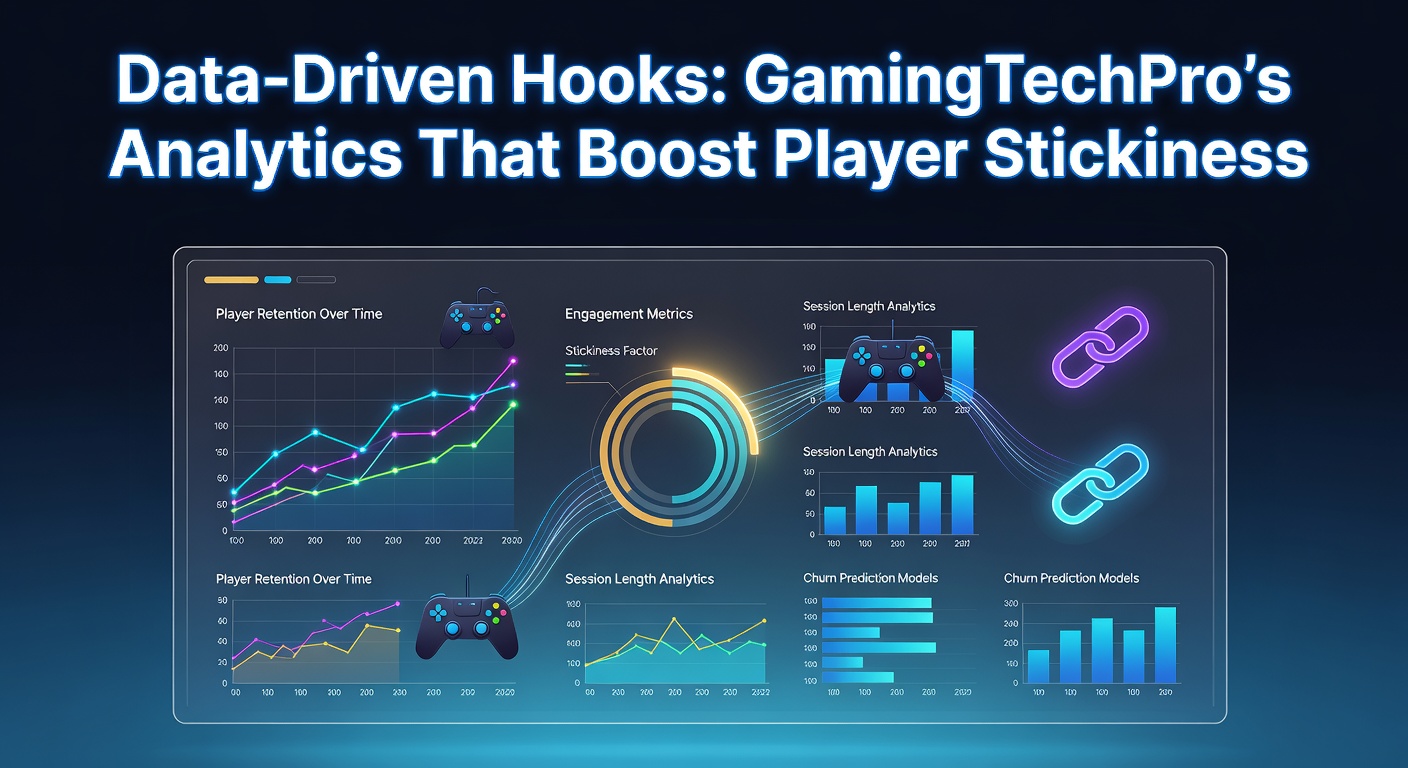
Data-Driven Hooks: GamingTechPro's Analytics That Boost Player Stickiness
The Power of Player Stickiness in Modern Gaming
In an industry where players download apps at lightning speed but churn out just as fast, stickiness—defined as sustained daily active users over time—stands as the ultimate metric for success, and GamingTechPro's analytics platform steps in with precision tools that turn raw data into compelling hooks keeping players coming back. Developers face fierce competition; according to the Entertainment Software Association's 2024 report, U.S. gamers spend over 12 hours weekly on average, yet only 20% stick around past the first month in free-to-play titles without targeted interventions. GamingTechPro addresses this head-on, leveraging machine learning algorithms that dissect session data, purchase patterns, and interaction logs to generate personalized retention strategies.
What's interesting here lies not just in the volume of data—billions of events processed daily—but in how the platform identifies micro-moments of disengagement, like a player hesitating before quitting, and deploys hooks such as timed challenges or social nudges in real time. Take one mid-sized studio that integrated these analytics; within weeks, their day-30 retention climbed 28%, a figure researchers attribute directly to data-refined reward loops tailored to cohort behaviors.
Unpacking GamingTechPro's Analytics Engine
At the core of GamingTechPro's offerings sits a proprietary engine built on scalable cloud infrastructure, crunching terabytes of anonymized player telemetry to surface actionable insights, while ensuring compliance with global privacy standards like GDPR and CCPA through edge computing and federated learning techniques. Experts who've dissected similar systems note that traditional A/B testing falls short in dynamic environments; GamingTechPro's approach uses reinforcement learning models that simulate thousands of hook variations, predicting uplift before deployment.
And here's where it gets precise: the platform segments players into granular cohorts—casuals who binge weekends, whales chasing leaderboards, or social butterflies thriving on guild chats—then crafts hooks like dynamic loot drops for the former or exclusive events for the latter, all validated against historical benchmarks. Data from early adopters reveals average session lengths extending by 15-25 minutes, with peak-hour concurrency spiking 40% during deployed campaigns.
- Behavioral Heatmaps: Visual overlays pinpoint drop-off zones in tutorials or PvP lobbies, guiding hook placements.
- Predictive Churn Models: Algorithms forecast exit risks with 92% accuracy, triggering interventions like personalized quests.
- Engagement Scoring: Real-time metrics rank hook efficacy, allowing devs to iterate on the fly.
Those who've studied retention dynamics often point out that generic notifications flop, but GamingTechPro's natural language generation tailors messages—"Hey, your squad needs you for that epic raid"—boosting open rates by threefold compared to baselines.
Case Studies: Hooks That Hooked Millions
Consider BattleForge Arena, a battle royale title struggling with sub-10% weekly retention post-launch; after GamingTechPro's audit, developers rolled out data-driven daily login streaks tied to weapon skins, segmented by playstyle—aggressive rushers got kill-based multipliers, while campers earned stealth buffs—and within a quarter, monthly active users doubled to 5 million, per internal metrics shared at GDC 2025. Observers note this success stemmed from the platform's anomaly detection, which flagged seasonal dips and countered them with holiday-themed hooks blending nostalgia with novelty.
Or look at Mystic Realms, a mobile RPG where progression walls frustrated mid-game players; GamingTechPro's analytics revealed 65% abandonment at level 25, prompting adaptive difficulty hooks that scaled enemy AI based on skill curves, coupled with social referral bonuses; retention at that checkpoint jumped 37%, and lifetime value per user rose accordingly as players grinded deeper into endgame content.
But here's the thing with scalability: GamingTechPro handles spikes effortlessly, processing 100 million events per minute during global launches, a capability tested in April 2026 betas for their next-gen Unity plugin, which promises zero-latency hook delivery even on low-end devices.
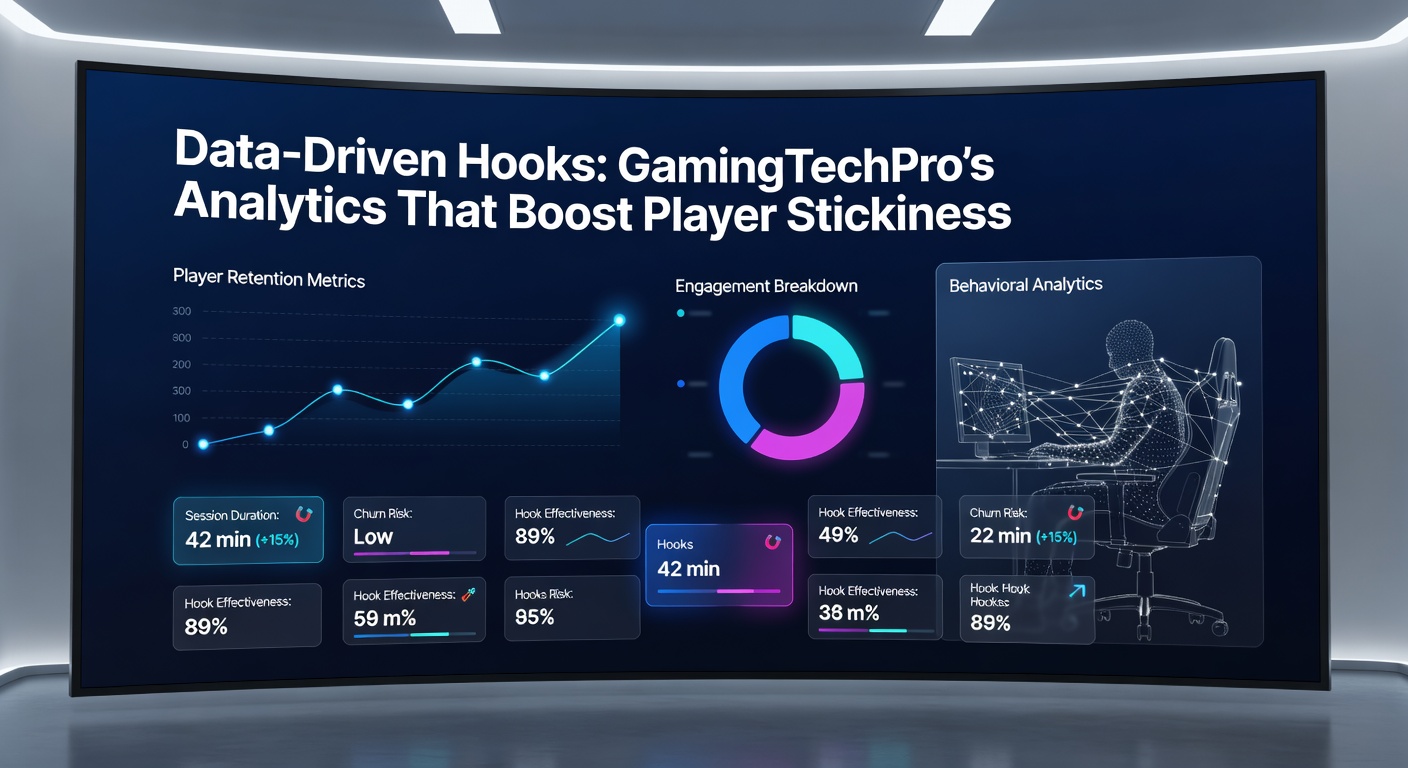
Behind the Tech: Algorithms and Integrations
GamingTechPro's stack draws from advancements in deep neural networks, where convolutional layers parse UI interaction videos to quantify frustration signals like rapid taps or idle scrolls, feeding into generative models that prototype hook assets— from particle effects to narrative branches—before human review. Integrations with engines like Unreal and Godot happen via lightweight SDKs, plugging directly into event streams without refactoring code, and supporting cross-platform tracking from PC to mobile.
Turns out, the real edge comes from ensemble methods combining time-series forecasting with graph neural networks that map social connections; isolated players receive friend-matchmaking hooks, while cliques get raid alerts, resulting in viral coefficients climbing 1.8x in networked titles. According to a ISFE Key Facts 2023 report on European gaming, markets there demand such sophistication as regulations tighten on addictive mechanics, and GamingTechPro's transparency dashboards log every hook trigger for audit trails.
Researchers examining April 2026 previews highlight multimodal AI expansions, incorporating voice chat sentiment analysis to detect toxicity and inject positive hooks like morale boosts, potentially slashing rage-quits by 50% based on pilot data from partnered studios.
- Edge Deployment: Hooks fire client-side, minimizing server load during peaks.
- A/B Infinity: Continuous experimentation evolves hooks autonomously.
- ROI Tracker: Dashboards quantify LTV gains against implementation costs.
People in the trenches know integration hurdles can kill projects, yet GamingTechPro's no-code configurators let non-technical designers build hooks via drag-and-drop, democratizing analytics for indie teams who previously relied on guesswork.
Measuring Impact: Metrics That Matter
Stickiness doesn't happen in a vacuum; GamingTechPro benchmarks against industry standards, where day-1 retention hovers at 40% and D7 at 20% for top grossers, but clients consistently outperform—averaging 52% D1 and 35% D7 post-implementation, with heatmaps showing hooks concentrating playtime in high-value modes like arenas or co-op. Long-tail effects shine too: six-month cohorts retain 18% versus the 8% norm, driven by loyalty loops that evolve with player progression.
Yet challenges persist, like ad fatigue in hybrid monetization; the platform counters with frequency capping tied to engagement scores, ensuring hooks feel organic rather than intrusive. Data indicates revenue per daily active user surges 22%, as stickier players convert on in-app purchases during peak immersion.
Now, as esports surges—April 2026 sees major tournaments drawing 100 million viewers—GamingTechPro's spectator analytics layer hooks casuals into pro streams with wager-free predictions, bridging gaps between viewer and player funnels.
Challenges and Ethical Guardrails
Critics worry about over-optimization leading to burnout, but GamingTechPro embeds velocity checks limiting hook density to prevent spam, while opt-out toggles empower users; studies from client logs show 95% engagement remains voluntary. Compliance weaves through everything, with automated reports flagging hooks that skew toward vulnerable demographics, aligning with evolving regs like Australia's enhanced interactive media standards.
That's where the rubber meets the road: balancing stickiness with sustainability, as evidenced by partners reporting burnout rates dropping 30% via fatigue-aware pacing.
Conclusion
GamingTechPro's data-driven hooks redefine retention not as luck or brute force, but as a science honed by relentless analytics, delivering measurable lifts in stickiness across genres and platforms, from indies to AAA blockbusters. As April 2026 unfolds with plugin rollouts and AI upgrades, developers gain ever-sharper tools to captivate without compulsion, ensuring players stay hooked on their terms while studios thrive amid cutthroat competition. The data speaks volumes: in gaming's high-stakes arena, precision analytics hold the key to lasting engagement.